





Mary, Queen of Heaven – Prince Paul I Esterházy’s Devotion to Mary
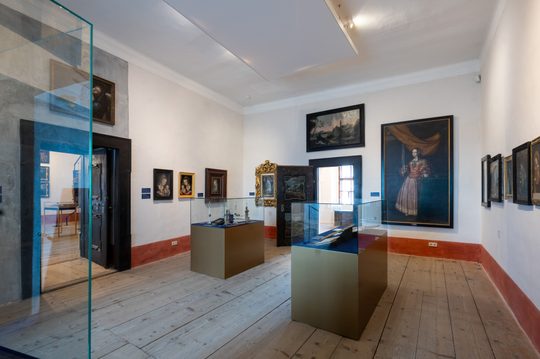
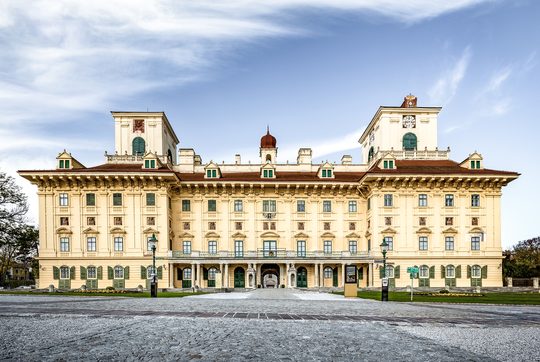
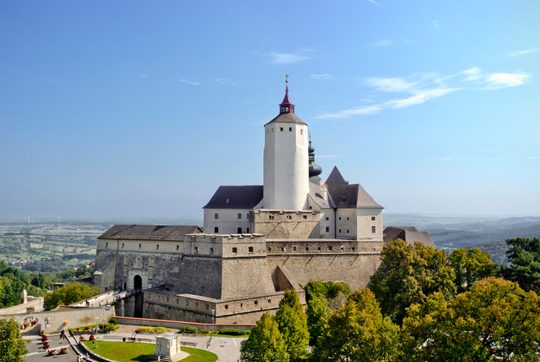
To this day, the collections preserved at Forchtenstein Castle and Eisenstadt Palace bear witness to the pervasive devotion to the Virgin Mary by Prince Paul I Esterházy (1635–1713) through a wide variety of objects. The annual exhibition “Mary, Queen of Heaven — Prince Paul I Esterházy’s Devotion to Mary,” a selection of centuries-old exhibits is presented for the first time, ranging from ornate Marian altars and filigree Marian columns to miraculous images in oil, on wood, or as prints, as well as publications and compositions in honor of the Mother of God penned by the prince himself.
The veneration of the Virgin Mary can already be seen in the early childhood of the future Prince Paul I Esterházy and was rooted above all in the example set by his mother, Christina, as well as in his education by the Jesuit Order. This devotion found expression in all the media and means available to him at the time: in church architecture, sculpture, painting, music, cabinet pieces, publications, etc. But even as an image on his battle flags, the Queen of Heaven and Patrona Hungariae was meant to offer him protection and grant him victory.
“You are all-encompassing in beauty, Mary, and you are without blemish. (…) You are the intercessor for sinners. O Mary, wisest Virgin, most merciful Virgin, pray for us, intercede for us with the Lord Jesus Christ. Amen.” These words by Prince Paul I Esterházy come from the draft of one of the planned inscriptions on the four sides of the base of the Marian column erected in front of Forchtenstein Castle in 1694. The monument, which the prince had commissioned, still radiates his devotion to Mary into the world today and bridges the present and the future. Like this impressive column, today’s Calvary in Eisenstadt, with its statue of Mary regarded as miraculous, is visible from afar and, carved in stone, bears witness to the prince’s inspired work in the spirit of Mary.
The Mother of God not only offered Paul I Esterházy protection and refuge during his lifetime in the fight against the Ottoman threat, as well as comfort and blessings on his pilgrimages as a devout pilgrim—the prince still rests today in eternal adoration of Mary in a coffin on the inside of which he had the image of Mary affixed.
Paul I Esterházy’s love, humility, and trust in the Queen of Heaven continue to move us to this day. The diversity of his collected, commissioned, and created works related to the Blessed Mother is no less impressive.